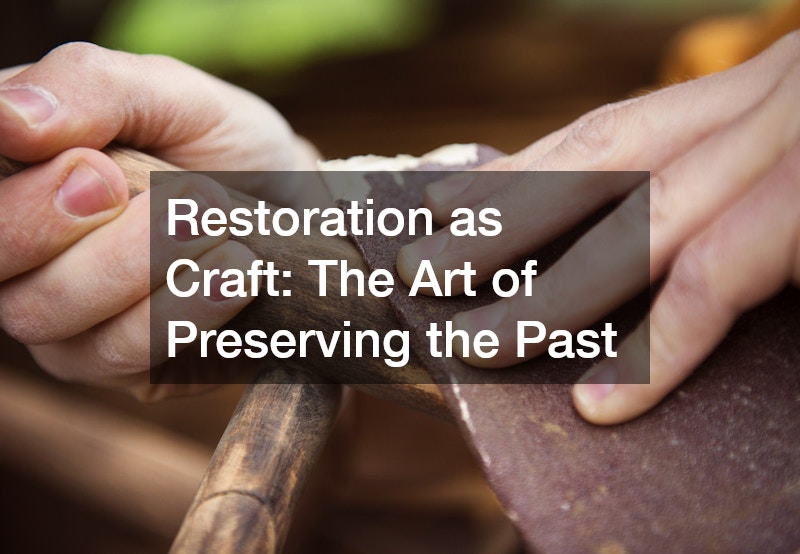
In an era increasingly defined by the disposable and the mass-produced, the act of restoration stands as a radical counter-culture. To restore is to look at a weathered object, whether it be a century-old architectural element, a piece of industrial machinery, or a delicate work of art, and see not its decay, but its inherent value. Restoration as a craft requires a unique intersection of historical reverence, scientific understanding, and manual dexterity. It is about honoring the original maker’s intent while utilizing modern technology to ensure the object survives for another century.
As we move through 2026, the “circular economy” has shifted from a buzzword to a lifestyle. People are no longer content with buying new; they are seeking the soul found in restored pieces that carry the weight of history. This guide explores the deep technical layers of the restoration craft, providing a roadmap for those looking to turn back the clock on history through precision, patience, and professional expertise.
Assessing Structural Integrity and Material Composition

Determining the Foundation for a Successful Rebuild
The first step in any restoration project is a forensic analysis of the material. Before any aesthetic work begins, a craftsman must ensure the object is structurally sound. For large-scale industrial or architectural projects, this often requires the help of specialized metal fabrication experts. These professionals can identify internal fatigue or corrosion in ironwork and steel frames that the naked eye might miss. By understanding the metallurgy of the original piece, you can decide whether to reinforce the existing structure or replace compromised sections with period-accurate materials.
Once the structural assessment is complete, the logistics of the project come into play. Many high-value restoration projects take months, if not years, to complete. During this phase, it is vital to rent a climate-controlled storage space that is climate-controlled. Storing a half-restored antique car or a dismantled piece of heritage architecture in a damp garage can cause more damage than the original passage of time. A dedicated, dry environment allows materials to stabilize while you source the rare parts or specialized tools needed for the next phase of the craft.
Beyond the physical space, this assessment phase acts as a bridge between the item’s past life and its future utility. By understanding exactly how a piece was originally constructed, a restorer can identify “stress points” where original design flaws may have contributed to the decay. Addressing these weaknesses during the structural rebuild ensures that the item is not just returned to its original state but is actually better equipped to handle the environmental stresses of the modern world.
- Material Testing: Use non-destructive testing (NDT) such as ultrasonic thickness gauging to check the health of metal supports without damaging the original patina.
- Logistics Management: Inventory every screw and bracket before moving items to a facility to ensure nothing is lost during the “stasis” period.
- Documentation: Take high-resolution photographs of the object from every angle before any disassembly begins.
- Stabilization: Apply temporary rust inhibitors or consolidants to stop active decay while the piece waits for its turn on the workbench.
Precision Engineering in Component Replication

Utilizing Modern Technology for Accurate Part Replacement
True restoration often hits a wall when a critical, proprietary part is missing or disintegrated. In these instances, a craftsman must look to cnc machine shops to bridge the gap between the past and present. Modern computer-numerical-control machining can take a 3D scan of a broken gear or a decorative finial and replicate it with micron-level accuracy. This allows a restorer to maintain the mechanical function of an object without cannibalizing parts from other rare surviving pieces, thus preserving the “DNA” of the original machine.
For components that require joining rather than machining, high-end welding services are indispensable. Restoring antique cast iron or delicate aluminum requires specialized techniques such as TIG welding with specific filler rods that match the original metal’s expansion rate. A master welder in the restoration field doesn’t just “stick” metal together; they perform “jewelry-level” repairs that disappear once the surface is finished, maintaining the seamless aesthetic intended by the original creator.
This marriage of high-tech manufacturing and artisanal welding represents the “Craftsmanship 2.0” movement. By utilizing these advanced tools, restorers can solve problems that were previously unsolvable, such as repairing cracked engine blocks from the 1920s or recreating intricate bronze hinges for a heritage building. The goal is to make the repair so precise and well-integrated that the transition between the 100-year-old metal and the new material is virtually indistinguishable to the untrained eye.
- Reverse Engineering: Use 3D laser scanning to create digital blueprints of parts that haven’t been manufactured in decades.
- Historical Metallurgy: Work with professionals who understand brazing and cold-welding techniques specifically for brittle antique metals.
- Prototyping: Print a 3D plastic model of a replacement part first to check for fitment before committing to expensive metal machining.
- Authenticity Checks: Ensure that new parts are stamped or marked as “reproduction” to maintain the ethical transparency of the restoration.
Surface Preservation and Aesthetic Finishing
Protecting the Exterior from Environmental Decay
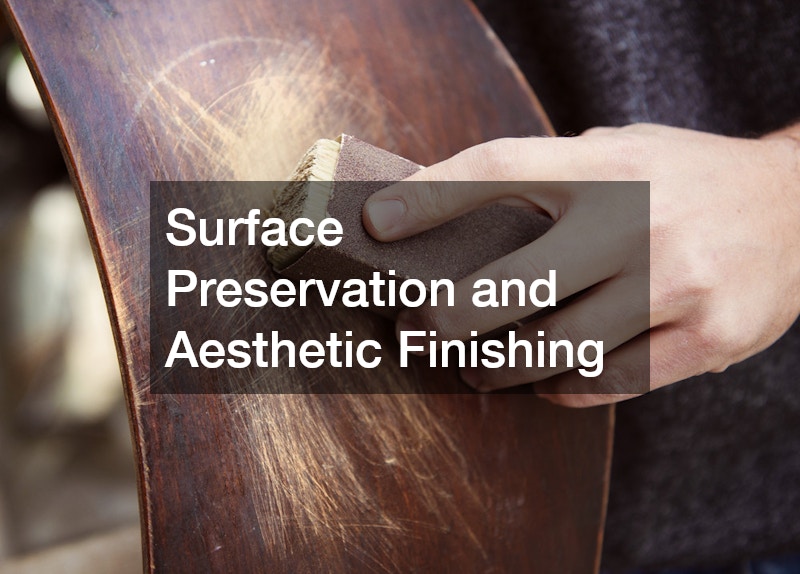
The “skin” of a restored object is its first line of defense. For industrial artifacts, vehicles, or outdoor sculpture, modern coating services provide a level of protection that was unavailable to the original makers. High-performance powders and paints can seal a surface against UV rays and oxidation while mimicking the exact color and luster of historical lead-based paints. The goal is to provide a finish that looks authentic but performs with the durability of 21st-century chemistry.
In high-traffic or high-moisture environments, an epoxy coating is often the superior choice for flooring or heavy-duty surfaces. For example, when restoring a historic warehouse or an engine room, a clear resin layer can seal the original concrete or metal floor, preventing oil and moisture from seeping back into the foundation. This creates a “time capsule” effect where the original materials are visible and protected beneath a clear, impenetrable shield, allowing the space to be used for modern purposes without damaging its historical character.
Proper surface preparation is the most critical component of this stage, as the most advanced coating in the world will fail if applied over invisible contaminants. Restorers often use media blasting or chemical stripping to reach a “white metal” or pristine wood state before the first primer layer is applied. This meticulous cleaning ensures a chemical bond that prevents rust from forming underneath the new finish, effectively stopping the clock on the item’s degradation for decades to come.
- Color Matching: Use spectrophotometers to analyze original paint chips found in “hidden” areas to find the true original color.
- Vapor Management: Ensure the surface is completely desiccated before applying coatings to prevent trapping moisture, which leads to bubbling.
- Texture Replication: For a true restoration, avoid “over-polishing” surfaces; maintain the subtle tool marks or “orange peel” textures characteristic of the era.
- Layering Safety: Always ensure that new chemical coatings are compatible with the substrate to avoid adverse reactions like peeling or “crazing.”
The Delicate Restoration of Light and Art
Balancing Fragility with Structural Longevity
When a project moves from the industrial to the ornamental, the skills required become increasingly specialized. Stained glass restoration is perhaps the most demanding of these niches, requiring a mastery of glass chemistry, lead-working, and kiln-firing. Each individual “quarrel” of glass must be cleaned and often re-painted with vitreous enamels to restore the vibrancy of the imagery. A master in this field doesn’t just fix a window; they restore the way a space experiences light and color.
For larger architectural elements or heritage sites, the scale of the work often requires the resources of a full-scale restoration company. These organizations bring together a diverse team of masons, carpenters, and artists under a single project manager. Managing a complex site restoration involves balancing the needs of modern building codes with the strict requirements of historical preservation societies, ensuring that the “soul” of the building remains while its “bones” are brought up to current safety standards.
This level of restoration is as much about philosophy as it is about physical work. Practitioners must decide where to stop, whether to keep the “honest wear” that tells the story of the object’s life or to return it to a “factory-new” condition. In many heritage contexts, the preference is for minimal intervention, where every original shard of glass or flake of gold leaf is preserved, and modern materials are only used as a discreet support system to hold the history together.
- Lead Mapping: Create a 1:1 rubbing of the window’s lead lines before disassembly to ensure the geometry is perfectly recreated.
- Glass Conservation: Use specialized “edge-gluing” with archival-grade resins to repair cracked historical glass without losing original material.
- Environmental Buffering: Consider installing “isothermal glazing”—a secondary clear pane—to protect the restored work from wind and pollution.
- Heritage Compliance: Maintain a detailed “Conservation Management Plan” to satisfy local and national heritage registries.
Transportation and Final Delivery Logistics
Ensuring Safe Transit of Restored Masterpieces
The final and most nerve-wracking stage of restoration is moving the finished piece from the workshop to its final destination. Given the fragility of restored items, standard courier options are rarely sufficient. For smaller, highly sensitive items, avoid the local post office and instead opt for white-glove handlers. These professionals understand how to move objects without putting stress on new joints or fresh finishes, ensuring that months of labor aren’t undone by a single bump in the road. If your piece is not yet ready to be shipped, you may need to rent storage temporarily.
To guarantee safety during transit, professional packaging services should be employed to create custom “museum-grade” crates. These crates are often lined with archival foams and equipped with shock and humidity sensors. The packaging is as much of a craft as the restoration itself; it is a custom-engineered environment designed to keep the object in a state of perfect stasis until it reaches its final pedestal. Whether the object is a 500-pound bronze statue or a delicate clock, the crate is its armor.
Logistics experts in the restoration field also have to plan for “climate shock” upon delivery. Moving an item from a climate-controlled workshop to an outdoor installation or a different geographic region can cause wood to warp or coatings to crack if the transition is too abrupt. Professional handlers will often leave an item inside its crate for 24 to 48 hours at the destination, allowing the temperature and humidity to equalize slowly before the final reveal.
- Custom Crating: Build dual-walled crates with integrated handles to ensure that handlers have secure grip points.
- Climate Monitoring: Use data loggers inside the packaging to track temperature and humidity fluctuations during the journey.
- Vibration Dampening: Utilize varying densities of foam to absorb the specific frequencies of road or air travel.
- Insurance Verification: Ensure that the “transit value” of the insurance policy matches the post-restoration appraisal, not just the original purchase price.
Restoration is a dialogue between the past and the future. It is a commitment to the idea that some things are worth more than their scrap value, that history has a weight and a texture that cannot be replaced by the new. By combining the old-world skills of hand-working with the high-tech precision of the modern age, restorers act as the stewards of human ingenuity.
A successful restoration doesn’t just result in a beautiful object; it results in a story made tangible. It is the satisfaction of seeing a dead machine roar back to life, or watching the sun stream through a glass window that was once dark with grime. For the craftsman, the reward is knowing that their work has extended the life of a masterpiece, ensuring that the next generation will also have the chance to stand in awe of the things we made. In the end, the craft of restoration is the ultimate act of respect for those who came before us.
Furthermore, this craft serves as a vital bridge toward a more sustainable future, proving that longevity and utility are far more valuable than the fleeting allure of the brand-new. By choosing to restore, we reject the environmental toll of over-consumption and celebrate the enduring quality of materials that were built to last. Each restored piece serves as a testament to the fact that with enough care and expertise, the functional beauty of our heritage can thrive in the modern day, inspiring a newfound appreciation for the objects that define our shared human narrative.